
Custom ALS Exercise Programs
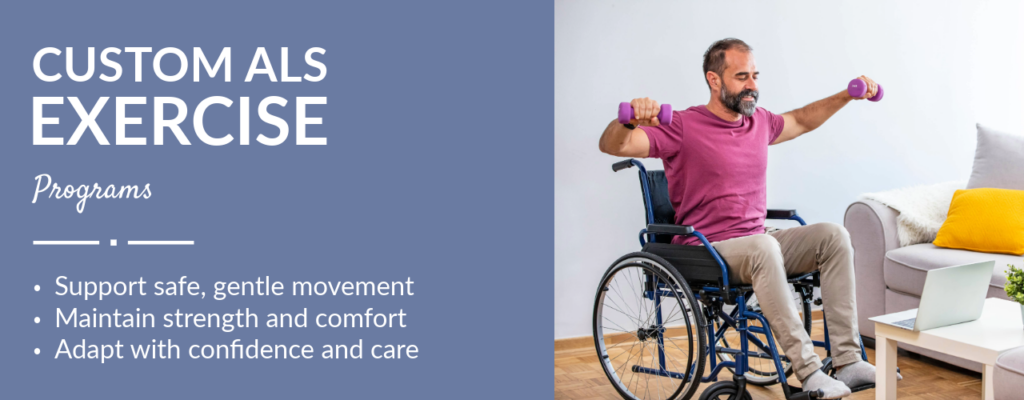
Living with ALS presents unique challenges, but the right support can make a world of difference. At Go Physical Therapy Balance Mobility Aquatics & Cancer Center, we believe that tailored care can help maintain function, reduce discomfort, and improve quality of life. We design custom ALS exercise programs with your individual needs in mind, offering safe and adaptable ways to stay active.
Why Exercise Matters in ALS Management
ALS (amyotrophic lateral sclerosis) is a progressive neurological condition that affects the nerve cells in the brain and spinal cord that control voluntary muscle movement such as walking, speaking, and swallowing.
Over time, ALS causes these neurons to weaken and stop sending signals to the muscles, leading to muscle weakness and loss of function. While ALS does not affect thinking, hearing, or vision in most cases, it can significantly impact mobility and daily activities, making early support and adaptive care especially important.
That said, exercise programs play a valuable role in maintaining quality of life for people with ALS. While it cannot stop the progression of the disease, it offers several key benefits, including:
- Maintaining muscle strength without overstraining
- Promoting better circulation and joint health
- Enhancing respiratory function with gentle conditioning
- Improving balance, which may reduce fall risk
- Encouraging a positive, active mindset
At Go Physical Therapy Balance Mobility Aquatics & Cancer Center, we focus on gentle, carefully monitored activity that works with your current abilities, not against them. Your safety, comfort, and energy levels are always our top priorities.
Our Recommended Exercise Programs for ALS Patients
Every person with ALS is unique, which is why we customize each plan to meet your needs. These examples show what a thoughtfully designed program might include, offering insight into the supportive strategies we use at our clinic:
1. Gentle Range-of-Motion Activities
- Slow, guided motion can keep joints moving comfortably, helping prevent stiffness and making daily tasks easier. We adapt movements to your abilities, and our therapists can help guide you through them if needed.
2. Light Strength Maintenance
- Target specific muscle groups with low-resistance activities to help preserve function for as long as possible. The focus is on safety, control, and minimizing fatigue.
3. Breathing and Posture Support
- Exercises that encourage deep breathing and good posture can support respiratory health, which is especially important for people with ALS, as muscle weakness affects breathing over time.
4. Balance and Stability Work
- We use safe, supported positions to help maintain balance. These activities can reduce fall risk and support confidence while moving.
5. Assisted Stretching for Comfort
- Therapist-guided stretching helps relieve tension, improve mobility, and maintain comfort, especially in areas prone to tightness.
6. Functional Movement Practice
- We incorporate movements that mirror daily tasks, such as reaching overhead or transitioning between sitting and standing. This keeps you prepared for real-world activities in a safe, controlled environment.
7. Energy-Conserving Activity Planning
- We help pace activity so you can enjoy exercise without overexertion. This supports comfort and reduces post-activity fatigue.
Staying Active with Support You Can Trust
Living with ALS means adapting, but it does not mean giving up movement entirely. With custom ALS exercise programs from Go Physical Therapy Balance Mobility Aquatics & Cancer Center, you can focus on safe, supportive, and purposeful activity. Our team will design a plan that fits your needs today and adjusts for tomorrow.
Contact our Grand Island, NE clinic today to schedule a consultation. Together, we can create an exercise program that supports your comfort, safety, and independence every step of the way.