
Suffering from Sciatica? PT Has Solutions
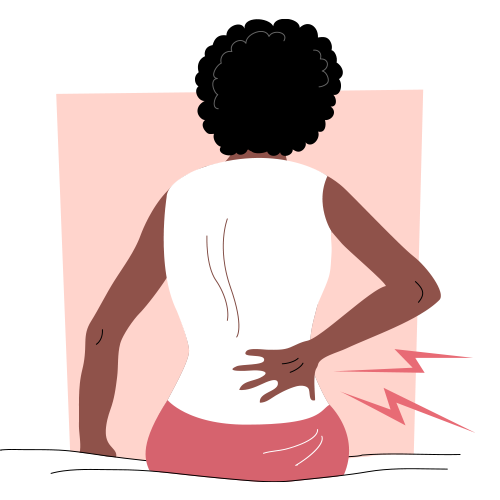
Are you dealing with burning, shooting pain that radiates from your lower back into your foot? This is the hallmark of sciatica, an often misunderstood nerve condition. While sciatica can be extremely painful–and often debilitating–you don’t need to despair. Physical therapy at GO Physical Therapy has solutions to help you find relief.
Sciatica is named for the sciatic nerve, one of the primary nerves in your body. Its roots are located in your lower back, and the nerve runs through the buttocks and down the back of the leg into the foot. While some people will refer to any pain in the lower extremities as sciatica, the term only refers to symptoms that stem from the sciatic nerve.
To help you better understand sciatica and what physical therapy can do to help, we want to share a case study of one of our patients, a 55-year-old woman we’ll call Sally. If you suspect you may have sciatica, schedule an appointment with us today!
Exploring Sally’s Symptoms
Sally’s pain was quite severe. She mostly felt it in her right leg–a shooting, electric pain that seemed to split down the back of her calf muscle. Occasionally, she felt a dull ache in her lower back, but her leg pain caused her the most trouble. It was worse when she was lying down or had to be on her feet for long periods.
The other issue–and the reason she ultimately found her way to our clinic–was that she also experienced a persistent pins and needles sensation down the back of her leg, which alarmed her. As her leg began to feel weak and heavy, she knew her symptoms weren’t going away on their own.
Identifying the Root Cause
Our physical therapists listened to Sally explain her symptoms and then performed a comprehensive physical evaluation to assess her strength, range of motion, and key areas. We also took a complete health history.
While we could confidently say Sally had sciatica, it was more important for us to determine why she had it. The truth is that sciatica isn’t so much a condition in and of itself as a sign that something is wrong with the sciatic nerve–usually that it’s been compressed or irritated.
So we dug a little deeper and confirmed what we suspected: Sally had developed a herniated disc. Herniated discs occur when the cushiony material between the spine’s vertebrae bulges outward. In Sally’s case, that bulging disc was pressing against her right sciatic nerve root, sending symptoms radiating down the nerve itself.
Addressing the Issue
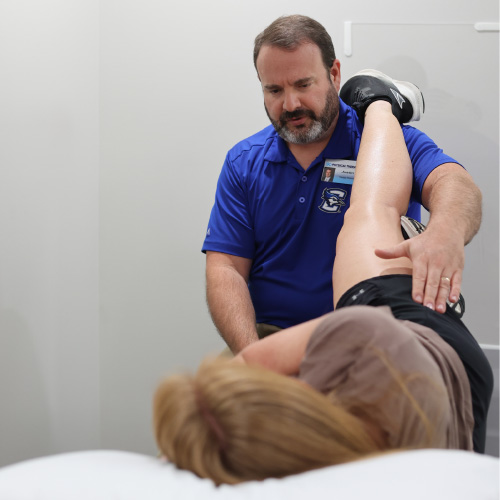
Once we knew Sally’s sciatica had developed due to a herniated disc, we were able to create a personalized treatment plan to address it. Fortunately for Sally, physical therapy is an excellent way of resolving pain from a herniated disc.
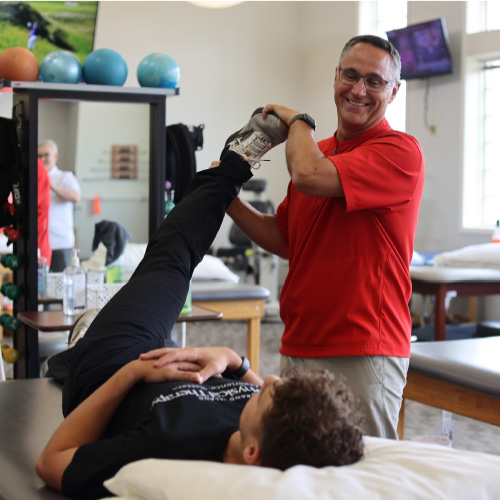
We began with acute pain management, particularly through manual therapy techniques like spinal mobilizations (guiding the back through its current range of motion) or soft tissue manipulation (a massage-like manipulation of the muscles and other tissue).
These techniques offered acute pain relief so Sally could begin working on a personalized exercise program. At first, we focused on gentle back stretches and encouraged Sally to walk around her block a few times a week.
But as she improved, we began incorporating core strengthening exercises, too. Why core strength? Well, your core muscles support and stabilize the spine; the stronger they are, the more support they offer the lower back. We guided her through a progressive series of exercises, increasing the intensity as she got stronger.
Finally, we gave Sally the tools she needed to prevent future herniated discs. Namely, we encouraged her to stay active, maintain her spine mobility, and continue strengthening her core. We also showed her proper lifting technique so she would be less likely to injure herself.
Find Your Own Sciatica Relief Today
If you have sciatica symptoms, you don’t have to suffer! The team at GO Physical Therapy can help you pinpoint the cause of your sciatica and find a solution that works for you. Call us today to get started.
Seasonal Recipe:
Crab Tacos
Dive into bold, coastal flavor with these irresistible Crab Tacos—light, zesty, and packed with fresh ingredients. They’re the perfect way to elevate taco night with a delicious seafood twist!
Ingredients
- Tortillas
For the filling - 50ml mayonnaise
- 200g brown crabmeat
- Juice ½ lime
- 1 small fennel bulb, very finely sliced
- ½ cucumber, halved lengthways, deseeded and sliced
- Small bunch fresh chives, finely chopped
- Small bunch of fresh coriander, roughly chopped
- 2 spring onions, finely sliced
- 300g white crabmeat
For the tomato salsa - 200g cherry tomatoes, quartered
- ½ red onion, very finely diced
- Juice 1 lime
- Handful fresh mint, finely chopped
- Coriander and mint leaves to garnish and lime wedges to serve
Directions
- Mix all the filling ingredients except the white crabmeat, then taste and season.
- Mix all the ingredients for the salsa in a bowl and season well.
- To assemble, fill a tortilla with some of the filling mixture, then top with some white crabmeat and a dollop of salsa.
- Garnish with a few herb leaves, then roll up the tortilla.
Thank You for Subscribing to GO Physical Therapy

Exercise of the Month
LOWER TRUNK ROTATIONS
Lie on your back with knees bent and feet flat. Gently drop your knees to one side while keeping your shoulders down, then return to center and rotate to the other side. This improves lower back flexibility.

Cancer Rehabilitation: A Path to Strength & Independence
Facing cancer treatment often brings fatigue, pain, and physical limitations. At GO Physical Therapy, our dedicated multidisciplinary team works with survivors like you to help restore strength, mobility, and quality of life.
Physical Therapy (PT) focuses on restoring range of motion, building muscle strength, and improving balance and coordination. Through personalized exercise programs and gait retraining, PT helps reduce pain and overcome mobility challenges that might follow surgery, radiation, or prolonged inactivity.
Occupational Therapy (OT) supports your day-to-day independence. Therapists assess your abilities for tasks like dressing and bathing, recommend adaptive tools, and teach energy conservation techniques to help manage fatigue and make life easier.
Speech-Language Pathology (SLP) addresses issues such as swallowing difficulties and changes in speech or voice. SLP specialists provide safe feeding techniques and exercises aimed at improving communication and swallowing safety.
Together, these therapies are part of a holistic approach. Your care team will educate and empower you with strategies to continue progress at home. With a customized plan and supportive guidance, your recovery can continue well beyond active cancer treatment. Ready to take the next step? Contact us today to schedule your consultation.

How Did We Do?
Click the link below to let us know how we’re doing! Leaving a review of your experience will help others to get the help that they deserve. We can’t wait to see you again!